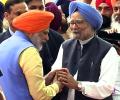
Whether it was the MGNREGS or the NFSA or the Aadhaar-based DBT scheme for cash transfer, the Modi government has built on the basic architecture created by the Singh government. Policy makers in the Modi government, instead of discarding them as products of the previous political regime, worked on them, expanded their scope and reach, and used new tools to improve their performance, explains A K Bhattacharya.

The finance minister's assertion that industry should not expect any spectacular announcements in the 2024 interim Budget suggest that the electoral imperatives of more tax concessions or higher expenditure on welfarist programmes could be far less pronounced than they were before the 2019 interim Budget, expects A K Bhattacharya.

If the Budget makes no big announcements on new schemes, projects, or tax giveaways, the government would face a major political dilemma as it may have to reluctantly consider shunning the practice of unveiling pre-election sops to woo voters, notes A K Bhattacharya.

Is it a case of poor targeting of a welfare scheme, or is it a reflection of the government's desire to expand the scope of this benefit to secure greater electoral dividends? asks A K Bhattacharya.

7 states account for over 80 per cent of the total direct tax collections by the Union government.

The communication was clear, transparent and worded in a manner that did not induce any fear in the minds of the people, point out A K Bhattacharya.

Pre-Budget excercise next month should scrupulously avoid adventurism of all types and refrain from making excessively ambitious projections on revenue and expenditure numbers for 2023-24, suggests A K Bhattacharya.

Elections may be a few months away, but the government may get into election mode much earlier than that, predicts A K Bhattacharya.
Can this growth in GST collection be sustained in the coming years? asks A K Bhattacharya.

'India has a lot of potential, not just in commercial aspects, but also in hiring of people and sourcing of products.'

Why did Karnataka's economic prosperity fail to influence the nature of electoral promises made by political parties in the run-up to the assembly elections? asks A K Bhattacharya.

The need for finding options for proper functioning of Parliament is of paramount importance as the frequency of the passage of Budgets and other economic Bills without discussion or debate has only increased in the last few years, notes A K Bhattacharya.

Whether this remains under control in the coming months will depend on the future intensity and spread of the Russia-Ukraine war, and the effectiveness of the Indian government's response, points out A K Bhattacharya.

Both prime ministers believed in crafting schemes to help the common man. Modi used quite effectively the instruments Dr Singh introduced. In assessing Modi's success with many schemes, Dr Singh's fundamental work should not be ignored, points out A K Bhattacharya.

The government must expedite its plan for asset sale and privatisation, both of which hardly got any mention in the Budget speech, points out A K Bhattacharya.

The finance minister has stayed true to her commitment to fiscal consolidation, even though the pace of the decline in the deficit could have been faster, notes A K Bhattacharya.

The free food scheme is driven by electoral considerations, but its long-term fiscal risks outweigh the short-term gains, cautions A K Bhattacharya.

Instead of conceding the demand for a cut in personal income-tax rates, Finance Minister Nirmala Sitharaman should phase out many exemptions in both personal and corporation taxes, suggests A K Bhattacharya.
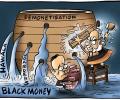
November 8 marks 6 years after demonetisation. A K Bhattacharya reveals how the prime minister and the RBI worked together for months before Modi's 8 pm speech. A riveting excerpt from The Rise Of Goliath: Twelve Disruptions That Changed India.
It is now becoming increasingly clear that rising imports have played a significant role in sustaining the buoyancy in revenues from GST, notes A K Bhattacharya.
